
My first encounter with soursop was through TikTok, and suddenly, I started seeing videos everywhere about soursop, soursop tea, soursop bitters, and all the possible health benefits.
So here we are with a Soursop 101 guide covering what is it, where to find it, how to use it, and what to know.
Because with all the hype came a lot of good questions.
What is soursop?
Where do you find soursop?
What does soursop taste like?
Is soursop good for blood sugar?
Can dialysis patients have soursop?
Is soursop tea safe?
And why are people saying it helps with so many things?
Soursop is being talked about for digestion, diarrhea, diabetes, fungal infections, high blood pressure, inflammation, cancer, gut health, and more. That is a lot of claims for one fruit(1)(2).
So, as a diabetes and dialysis Registered Dietitian, I wanted to take a closer look. Not from a supplement angle, but from a food first approach.
What Is It?
Soursop has such a fun name to say, and I actually really like saying it. Its scientific name is Annona muricata, but you may also see it called guanabana, graviola, guyabano, prickly custard apple, corossol, or nangka belanda (1).
Soursop is native to tropical parts of Central and South America and is grown in warm tropical and subtropical climates. It is also grown in areas of Asia and in warmer parts of the United States, like Florida.
Personally, I have never tried fresh soursop straight from the fruit, but I have tried the frozen kind in a bag and the juice drinks in cans.
The taste is often described as a mix of pineapple, strawberry, banana, and citrus. It is soft, creamy, sweet, and a little tangy. The texture is not firm like an apple. It is more soft and fibrous, which makes it great for smoothies, juice, desserts, and frozen drinks.
And even though soursop may look a little like jackfruit because of its green spiky skin, they are two completely different fruits. Jackfruit is much larger, has yellow fruit pods inside, and can even be used as a meat substitute when unripe. Soursop has a white creamy pulp and is usually used for drinks, smoothies, desserts, and tea.
Where Do You Find It?
Finding fresh soursop is not always easy. Depending on where you live, you may not see it often at regular grocery stores or farmers markets.
Fresh soursop is more likely to be found during warmer months and in places that carry tropical fruits. I would check international grocery stores, especially Hispanic and Asian markets, along with specialty produce stores.
Frozen soursop pulp is usually much easier to find than the fresh fruit. Where I live, I can find the frozen pulp through stores like El Super or Vallarta. You may also see it labeled as guanabana pulp, graviola pulp, or guyabano. You can also order soursop products online, but it can get expensive, especially for the fruit, frozen pulp, and dried leaves.
The leaves are easier to find online and are often sold as tea leaves. If you are buying soursop tea, I personally prefer whole dried leaves instead of powders or mystery blends. With whole leaves, you can actually see the product and better control how much you are using.
You may also find bottled soursop juice or canned drinks, but many of them can be high in added sugar. When choosing a soursop drink, read the label. Ideally, soursop should be one of the first ingredients listed. That way, you are not just buying a watered down drink with artificial flavoring and added sugar.
Soursop Nutrition and Food Benefits
Since it is a fruit, it is a carbohydrate source. But what makes it interesting is that it is considered a low glycemic index and low glycemic load fruit. This means that, per serving, it may not raise blood sugars as quickly or as high compared to some higher glycemic foods.
That said, it still contains carbohydrates, so portion size still matters, especially for anyone managing diabetes or watching blood sugars.
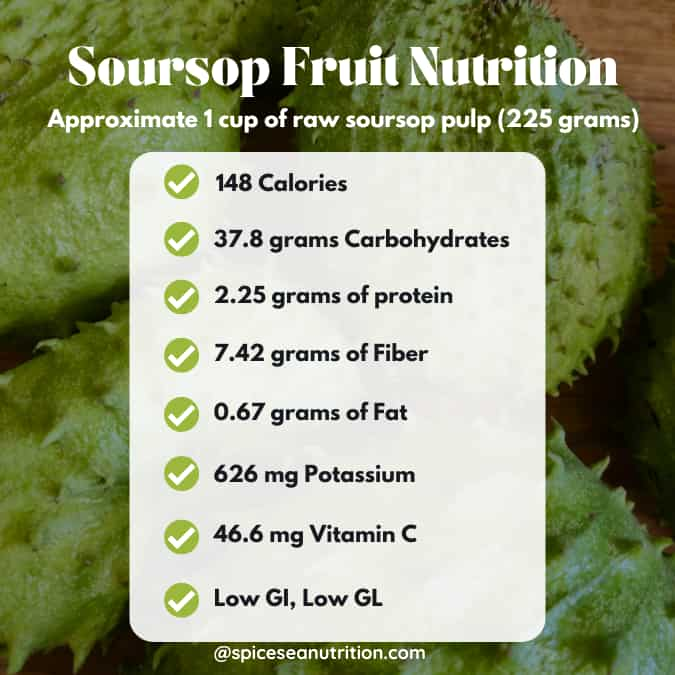
For about 1 cup of raw pulp, which is around 225 grams, the nutrition is approximately (3):
148 calories
2.25 grams protein
37.8 grams carbohydrates
7.42 grams fiber
626 mg potassium
60.8 mg phosphorus
46.4 mg vitamin C
0.67 grams fat
One cup has about 7 grams of fiber, which is pretty impressive for a fruit. If you are counting net carbs, that would be around 30 grams of net carbs per cup.
Fiber is one of the biggest nutrition benefits here. Fiber can help support digestion, help you feel fuller longer, and support healthy bowel movements. Getting enough fiber in your daily diet is also linked with better long term health (4)(5).
Research on soursop pulp has also found that it contains dietary fiber and phenolic compounds, which are plant compounds connected to antioxidant activity (4).
What About All the Health Claims?
Soursop has been used in traditional medicine for many years, especially the fruit, leaves, bark, roots, and seeds. Because of this, it is often connected to claims around digestion, infections, inflammation, blood sugar, blood pressure, and even cancer.
I do believe traditional medicine has a place, and I also believe in a food first approach. Soursop does contain plant compounds like acetogenins, alkaloids, flavonoids, and polyphenols, which may explain why it has gained so much attention.
But the limited human studies are where I become more cautious. That does not mean soursop has no benefits, but it does mean we need more research before we can concretely say, “this does this.”
As a Registered Dietitian, my take is to start with food first. Enjoy seed free soursop pulp, smoothies, juice, or occasional tea if it is safe for you. I would be more cautious with supplements, bitters, and extracts because the dose is stronger and harder to measure.
Soursop for Weight Loss
Soursop does not magically burn fat. No fruit does. But can it fit into a weight loss friendly eating pattern? Yes, it can.
Because soursop has fiber, it may help you feel more satisfied compared to drinking a sugary juice or eating a low fiber snack. The key is how you use it.
A soursop smoothie made with Greek yogurt and chia seeds will be more filling than a sweetened bottled soursop drink. A small serving of frozen soursop pulp blended into a smoothie can be a fun way to add fruit, fiber, and flavor.
If you are using it for weight loss, I would focus on serving size, added sugar, pairing it with protein, adding fiber rich ingredients, and avoiding sugary drinks and concentrated supplements.
How to Make Soursop Tea
Soursop leaves are often used to make tea in traditional practices. If you want to try it, I would keep it simple and use a moderate amount. Purchase whole leaves and not powdered.
Easy Soursop Tea Recipe
Ingredients
2 to 3 dried soursop leaves
2 cups water
Optional honey
Optional lemon
Directions
Bring 2 cups of water to a gentle boil.
Add the dried soursop leaves.
Turn the heat down and let it steep for about 10 minutes.
Cover it while steeping if you can.
Strain the tea into a cup.
Add honey or lemon if desired.
I would not drink this all day or use it long term without talking to your healthcare provider.
Easy Soursop Smoothie
This is probably my favorite way to use soursop because it keeps the fruit as food and makes it more balanced.
Creamy Soursop Smoothie Recipe
Ingredients
1 cup frozen soursop pulp
1 cup plain Greek yogurt
1 tablespoon chia seeds
2 teaspoons honey, optional
Directions
Add the frozen soursop, Greek yogurt, chia seeds, and honey to a blender.
Blend until smooth and creamy.
Add a splash of water or milk if you need it thinner.
Serve cold.
This makes about 2 servings.
I like this version because you get fruit, protein from the Greek yogurt, and some more fiber from the chia seeds. It is a more balanced way to enjoy soursop instead of just drinking a sweetened juice.
Does Soursop Contain FODMAPs?
Simple answer: I could not find a credible resource that clearly lists soursop as low FODMAP or high FODMAP (6).
Since soursop does not seem to have a clear tested serving size, I would treat it like an untested fruit if you are following a low FODMAP diet.
If you really want to try it, wait until the reintroduction phase, start with a small amount, and see how your body responds. Everyone’s tolerance can be different.
Is Soursop Good for Dialysis Patients or People Watching Potassium?
Short answer: probably not the best choice.
One cup of raw soursop pulp contains about 626 mg of potassium. Even half a cup would be over 300 mg of potassium, which can be considered high for someone on a potassium restriction. For dialysis patients or anyone who has been told to watch potassium, soursop should be limited. And I would be even more cautious with supplements, powders, extracts, or bitters because the potassium and plant compounds will be harder to measure (7).
If you are on dialysis or have kidney disease, please ask your renal dietitian or healthcare provider before adding soursop into your diet.
What Are Soursop Bitters?
Soursop bitters are a liquid herbal product that supposedly has soursop added to them. They are not the same as eating soursop fruit or drinking a simple soursop smoothie.
Many bitters may include a mix of herbs, roots, bark, leaves, or extracts, so it can be hard to know exactly how much soursop is actually in the product.
Soursop Bitters vs. Soursop Fruit
The fruit gives you fiber, vitamin C, carbohydrates, and a natural tropical flavor. The tricky part with soursop bitters is that it can be hard to know how much soursop extract is actually in one serving. Some products/brands may contain only a small amount, while others may be more concentrated. And the more concentrated it is, the more cautious I would be. For me, food first means trying seed free soursop pulp, fresh fruit, smoothies, juice, or an occasional tea before jumping into bitters, powders, or supplements.
Safety Tips Before Using Soursop
Avoid the Seeds
One important safety tip is to avoid the seeds. Soursop seeds are not meant to be eaten, and this is why I would look for seed free soursop pulp when buying frozen fruit, juice, or packaged products. If you are using fresh soursop, remove the seeds before blending, juicing, or eating the fruit (8).
Be Careful With Soursop Bitters, Powders and Supplements
Soursop bitters, powders, and supplements can be harder to evaluate because the amount and concentration of soursop may not always be clear. Some products may contain very little, while others may be stronger than expected, so the effects can be harder to predict.
Toxicity studies suggest that the safety of soursop depends on the plant part, extract type, and dose. Higher dose extracts have been linked to concerns like low blood sugar, kidney effects, and possible neurological issues in animal or lab studies. However, these concerns are mostly tied to continuous or excessive exposure, not normal food amounts (2).
Do not use soursop products as a replacement for medication or medical treatment, and check with your healthcare provider first if you are pregnant, nursing, on dialysis, or managing diabetes, kidney disease, or high blood pressure.
My Food First Take on Soursop
Soursop is a unique tropical fruit with a creamy, sweet, and slightly tangy flavor. It can be enjoyed in smoothies, juice, tea, desserts, and frozen drinks.
There are many health claims online, and some of the research is interesting. But I would still approach it with balance. The safest and most practical way to try soursop is to start with food first.
Use seed free frozen pulp.
Try a simple smoothie.
Make a small cup of tea if it is appropriate for you.
Read labels carefully.
Be cautious with supplements, bitters, and concentrated extracts.
For me, soursop is worth exploring as a food. It is high in fiber, has vitamin C, and brings a fun tropical flavor to smoothies and drinks. But like anything wellness related, more is not always better. Start small, be mindful, and make sure it fits your personal health needs.
Get the Free Downloadable Handout!
So are you ready to put this information into practice? Download the FREE 3-page, full-color PDF handout packed with practical tips and strategies for healthy meal planning.
This handy guide will walk you through creating a healthy Southeast Asian plate, complete with a food list for each section to help you build a well-balanced meal. So what are you waiting for? Grab your free copy now.


